Your Brain Doesn't Want You to Meditate (And That's Fine)
Jan 8, 2026
I used to think meditation was something other people did.
You know the type. The ones who wake up at 5 AM, sit cross-legged on a cushion, and somehow emerge 20 minutes later looking serene and centered.
I tried it once. Lasted maybe three minutes before my brain started cataloging everything I should be doing instead. My to-do list. That email I forgot to send. Whether I'd locked the front door.
The whole "sit still and breathe" thing sounded great in theory. In practice, it felt like being trapped in a waiting room with the loudest version of my own thoughts.
Here's what nobody tells you about meditation: it doesn't have to look like meditation.
Meditation Is Just Repetition With Space to Think
I meditate at the gym.
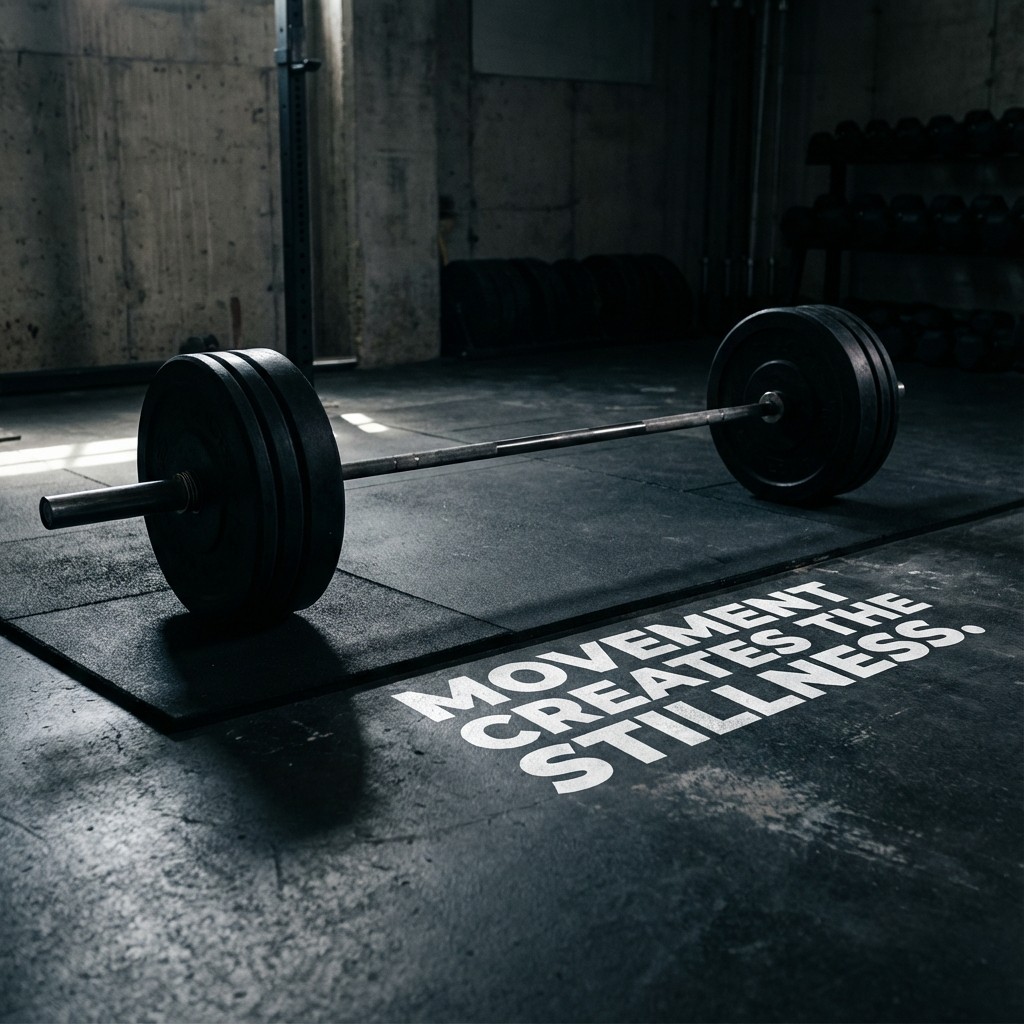
Not in some corner doing breathing exercises. I mean I actually meditate while lifting. Same bar. Same weight. Same movement. Rep after rep.
The repetition occupies my body. My mind finally gets space to wander without supervision.
That's when the real thinking happens.
You don't need a cushion or incense or an app telling you to "return to your breath." You need something routine enough that your conscious brain can check out while your body handles the mechanics.
Running works. Washing dishes works. Driving a familiar route works. Anything that creates rhythm without demanding constant decision-making.
For people whose brains refuse to sit still, movement creates the stillness. The body becomes the anchor. The mind gets permission to finally process everything it's been holding.
The Real Work Isn't Clearing Your Mind
Meditation isn't about achieving some zen state where your mind goes blank.
It's about creating space to actually think about the things you've been too busy to process.
And that's where it gets uncomfortable. Because what surfaces isn't usually peaceful or enlightening. It's the gap between who you were and who you're becoming. It's the friction of shedding an old identity while building a new one.
I've started calling it the shadow self.
It's the version of you that you're actively outgrowing. The habits you're breaking. The beliefs you're unlearning. The limitations you're challenging.
And it doesn't go quietly.
It shows up as imposter syndrome. As self-doubt. As that persistent voice insisting you're not qualified, not ready, not enough.
Even after you've done the work. Even after you've earned your place. Even after you've proven it to everyone including yourself.
Your Brain Is Built for Survival, Not Thriving
Here's what I've learned about brains: they're optimized for survival, not growth.
Growth demands risk. Change requires uncertainty. Evolution means releasing what's familiar and comfortable.
Your brain despises all of that.
So it fights back. It whispers that the old way was safer. It catalogs every past failure as evidence. It builds an airtight case for staying exactly where you are, because where you are is known. And known feels safe.
That's not weakness. That's biology doing its job.
The work isn't silencing that voice. The work is recognizing it for what it actually is: outdated programming running protection protocols against threats that don't exist anymore.
You have to consciously, repeatedly choose to trust the version of yourself you're building over the version you're leaving behind.
Transformation Takes Years, Not Sessions
I know this sounds like the kind of thing people say when they're trying to sell you a course, but stay with me.
Personal evolution doesn't happen in a weekend workshop or a 30-day challenge. It happens in the accumulated weight of showing up consistently over years. Boring years. Unremarkable years where nothing feels like it's changing.
One meditation session won't rewire your brain. One honest conversation won't heal old wounds. One good decision won't override decades of conditioning.
You need reps.
The same way you can't do one workout and expect abs, you can't do one introspective practice and expect transformation.
The transformation happens in the repetition. In the boring, unglamorous work of returning to the practice even when it feels like nothing's happening.
Especially when it feels like nothing's happening.
The Gap Between Wanting and Doing
Everyone wants bigger arms. No one wants to do the reps.
Everyone wants clarity. No one wants to sit with the discomfort long enough to actually find it.
Everyone wants to evolve. No one wants to spend years confronting the parts of themselves they've been avoiding.
That gap is where most of us live.
We want the outcome without the process. The destination without the journey. The transformation without the years of uncomfortable work.
I'm not saying that to judge anyone. I'm saying it because it's human. It's the default setting. I've lived in that gap myself more times than I can count.
But recognizing that gap exists? That's the first step toward closing it.
You're Not Broken for Struggling
If meditation feels impossible, you're not doing it wrong.
If personal growth feels slow, you're not failing.
If imposter syndrome still shows up after years of success, you're not broken.
You're just human.
The work isn't making the discomfort disappear. The work is learning to coexist with it. To keep moving while it's there.
Your former self will always be there in the background, whispering doubts. The key is building a relationship with your future self that's louder, clearer, and more trustworthy than those whispers.
That takes time. That takes practice. That takes showing up even when progress feels invisible.
But if you're reading this, you're already doing it. You're asking the questions. You're showing up.
Keep going. The reps compound.