The Question That Saved My Marriage (And My Leadership)
Jan 9, 2026

I used to think helping people meant fixing their problems.
My wife would tell me about a frustrating day. Before she finished her second sentence, I'd already mapped three solutions in my head. By sentence four, I was explaining exactly what she should do.
She didn't want solutions. She wanted me to shut up and listen.
I learned this the hard way. Multiple times. When you're wired to solve problems, your brain doesn't ask permission before fixing things.
The Fixer's Trap
If you build things, lead teams, or run a business, you've trained yourself to identify problems and eliminate them. Your job. How you add value.
The mode doesn't turn off when you leave work.
Someone shares a struggle. Your brain immediately starts pattern-matching. You've seen this before. You know what works. You want to help.
You offer the solution.
Somehow, the person gets more frustrated. They feel dismissed. Unheard. Like you weren't listening.
You were listening. You were listening like a mechanic listens to an engine. Diagnosing the problem so you could fix it.
But people aren't engines.
What Happens When You Jump to Solutions
What I didn't understand for years.
When someone shares a problem, they're often processing out loud. They're not asking you to solve it. They're inviting you into their experience.
Your rapid-fire solution sends a message you don't intend: This isn't complicated. You're overthinking it. Do what I said.
Even when you're right, you've created distance instead of connection.
I used to think my wife was being difficult when she'd say, "You're not listening." I was listening. I was giving her solutions. What more did she want?
She wanted me to understand: sometimes the point isn't solving the problem. The point is acknowledging the problem is hard.
The One Question
I started asking a different question before responding.
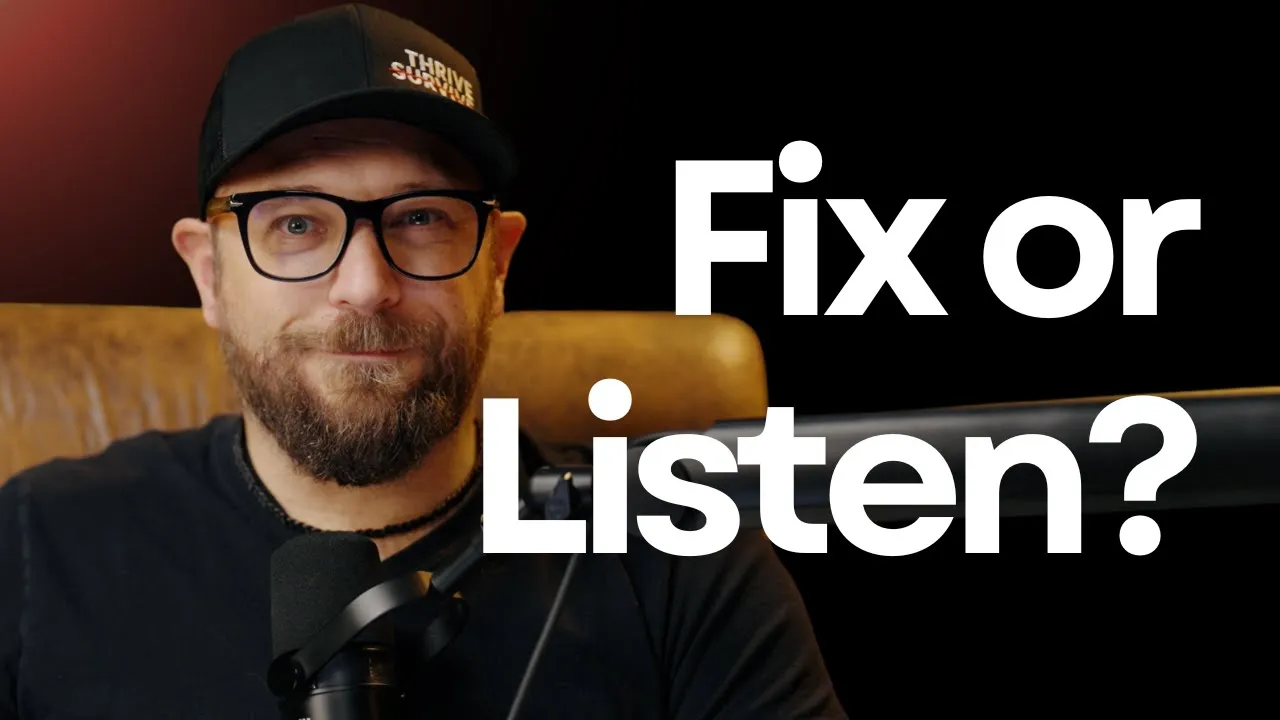
"Do you want me to fix this, or you want me to listen?"
There you go. The entire framework.
Sounds too simple? A little mechanical? Works because no more guesswork.
You're not reading minds. You're not assuming what someone needs. You're asking directly.
Most of the time, people want you to listen.
What Listening Requires
If they say "listen," tell your brain to sit down and be quiet.
Harder than you'd think. Your brain keeps generating solutions. You have to suppress the impulse.
I talk to my brain like it's a separate entity. Relax. Listen. You don't need to fix this.
Then I focus on what they're saying. Not what I'd do. Not how I'd solve it. What they're experiencing.
Acknowledge the difficulty. Reflect what you're hearing. Let them process without steering.
When They Want Solutions
Sometimes people want your input. You'll know because they'll ask for it.
"What do you think I should do?"
There's your signal. Time to shift into problem-solving mode.
When you wait for the invitation, your solutions land better. They're received as collaboration instead of correction.
Why This Works Beyond Marriage
I started using this framework everywhere. With my team. With podcast guests. With friends navigating hard decisions.
Works because you respect the other person's agency.
You're not assuming you know what they need. You're not treating every conversation like a problem to be solved. You're creating space for them to determine what kind of support serves them.
In leadership: When someone brings you a challenge, ask if they want your input or if they're thinking out loud. They often need permission to work through it themselves.
In creative work: When someone shares early ideas, ask if they want feedback or if they're still forming the concept. Premature critique kills more good ideas than bad execution.
In coaching: When someone describes a struggle, ask if they want strategies or validation. Knowing the struggle is real matters more than knowing what to do next.
What Fixers Miss
For years, I thought offering solutions was how I showed care. If I fixed something for someone, I valued them enough to invest mental energy in their problem.
Care isn't always action. Sometimes care is presence.
I had to learn this: listening without an agenda feels as good as solving. Better, because you build connection instead of resolving issues.
The satisfaction doesn't come from being the hero who fixed everything. It comes from being the person someone trusted enough to share their experience with.
How to Implement This Without Feeling Weird
The first few times you ask "Do you want me to fix this or listen?" you'll feel awkward. You'll worry it sounds too transactional.
Ask anyway.
People appreciate clarity. They'd rather have the mechanical question than another conversation where they feel unheard.
After a while, it becomes natural. You'll notice patterns. You'll learn which people want solutions and which people want space to process.
You'll still ask. People's needs change based on context. Assuming is how you get it wrong.
What Changes When You Get This Right
Your relationships get clearer. People trust you more because you're not hijacking their problems.
Your leadership improves. Your team stops bringing you every decision because they know you'll help them think instead of telling them what to do.
Your conversations go deeper. When people know you listen without fixing, they share things they wouldn't tell you otherwise.
You get less exhausted. You're not carrying the weight of solving everyone's problems. You're holding space when needed.
Start With One Person
Pick someone you care about. Someone you tend to offer solutions to automatically.
Next time they share something difficult, ask the question. "Do you want me to fix this, or you want me to listen?"
Then do what they ask. Even if your brain is screaming with solutions. Even if you know what they should do.
See what happens when you give people what they need instead of what you think they need.
Real connection lives there.