Why I Build Things That Don't Need to Exist
Jan 23, 2026
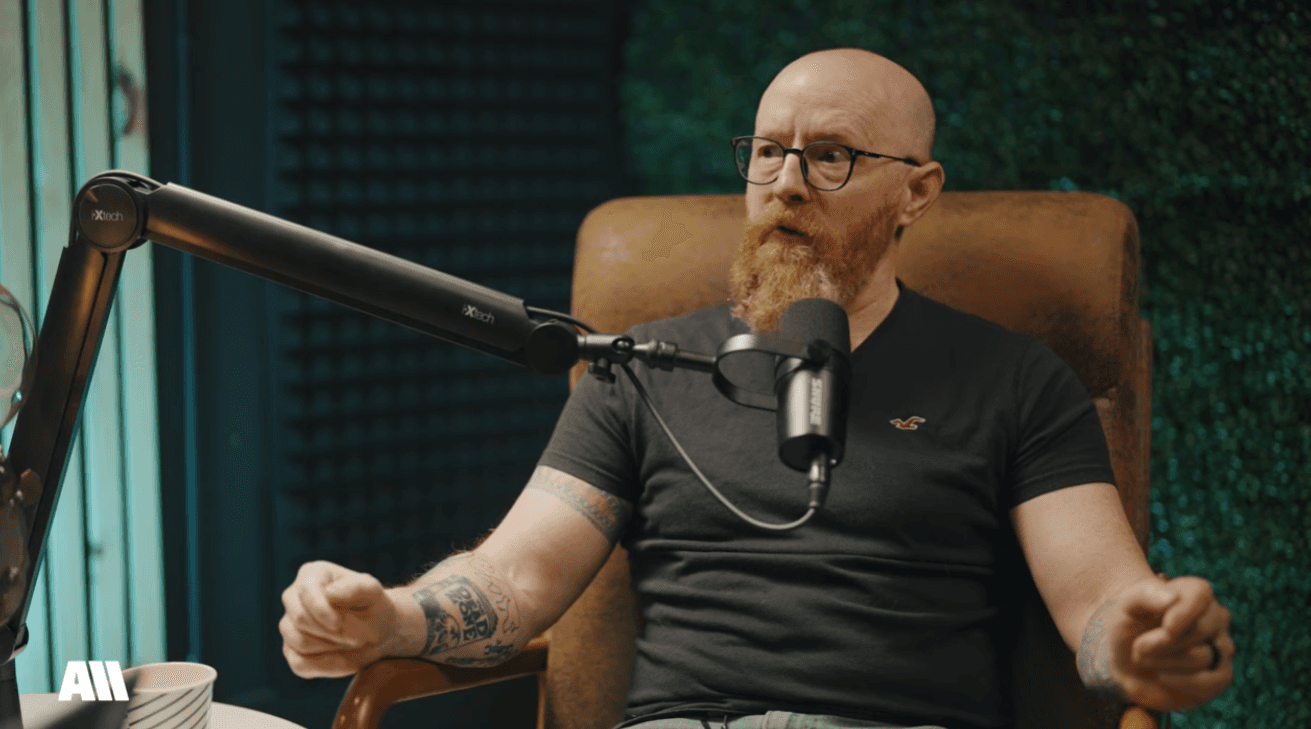
Recently a coversation with my good friend Phil Barnes (Ginger Beard Makes) made me consider why do we make things.
Creators, Makers, Builders of STUFF.
I've been thinking about in particular why I create things.
Not the surface answer.
The uncomfortable truth that sits beneath all the talk about flow states and creative expression and finding your passion.
I spent years as a commercial photographer before I started podcasting. Different mediums. Different outputs. But the same underlying pull toward making something that didn't exist before. Here's what I've learned about the creative process that nobody talks about.
The Process Myth
Everyone tells you to enjoy the journey. Fall in love with the process. Find joy in the making, not just the finishing.
I've tried. I really have.
When I start a project, I tell myself this time will be different. This time I'll savor every moment of creation instead of racing toward completion. But my brain doesn't cooperate. There's this constant pull toward the end state, this low-grade anxiety that won't release until the thing is done.
The only exception? When curiosity takes over completely.
I've found that podcasting gives me this in a way photography never quite did. When I'm talking to someone and we're both chasing an idea together, time disappears. The conversation becomes the thing itself. There's no separation between process and product because the process is the product.
But that's rare. Most creative work lives in this tension between making and completing.
The Collaboration Factor
I used to do commercial photography shoots where the subject was actively trying to help make the image. Not just posing. Actually collaborating on the vision.
Those sessions felt different.
There's this energy that forms when two creative minds sync up toward a shared goal. A moment in time that only exists because both people are fully present and working toward the same thing. That's probably the magic I'm actually chasing in all creative work.
Podcasting amplified this. It's not me with a light and a camera anymore. It's a whole team behind me, all actively engaged in making the show as good as it can be with what we've got.
The collaborative aspect expanded from one-on-one to something bigger. We're building the best show we can with the knowledge we have and the guests we can access. That amalgamation of all our creative experiences creates something none of us could make alone.
The Validation Shift
I used to need external validation. Badly.
Every project existed in this weird limbo until someone else confirmed it was good. My internal barometer was broken or maybe just underdeveloped. I couldn't trust my own judgment about whether something I created actually worked.
That's changed over time. Slowly.
I've developed an internal sense of what resonates with me and what doesn't. I still want people to like what I do. I'm not going to pretend I'm above that. But it's not the driving force anymore. The work stands or falls based on whether it meets my own standard first.
This shift took years. It's not something you can force or fake your way into. You have to make enough things and fail enough times to develop that internal compass. There's no shortcut.
The Curiosity Question
I recently interviewed someone who learns new skills compulsively. Not because he's avoiding asking for help. Not because he's trying to prove something. Just pure curiosity driving him forward.
He's chasing what drives him by fully exploring whatever catches his attention. People are naturally curious. This was just his way of honoring that.
I'm in a different place now. I'm okay saying I don't know and then connecting the right people with the right people to ensure the best possible product. That connecting role is its own creative skill that often gets overlooked.
There's wisdom in recognizing what you don't need to learn yourself. In knowing when collaboration serves the work better than acquisition.
The Physical Creation Paradox
I love watching people who create physical things with their hands as a rebellion against our screen-saturated world. There's something powerful about that choice.
But my own physical creation looks different. It's more about building things and fixing things than creating art for art's sake. I like to create things that have value and usefulness. I'm not someone who sits down to make something purely because it should exist.
That practicality is its own form of artistic expression. Function and form aren't separate. The things I build serve a purpose, and that purpose shapes how I approach making them.
What Actually Matters
Here's what I've figured out after years of making things.
The creative process isn't one thing. It shifts based on what you're making, who you're making it with, and why you're making it in the first place. Sometimes you lose yourself in the flow. Sometimes you're just grinding toward completion. Both are valid.
Collaboration changes everything. The energy between creative minds working toward a shared vision creates something that solo work can't touch. That shared moment in time is what I'm actually chasing in all of this.
External validation matters less as you develop your internal barometer. But that development takes time and repeated failure. You can't rush it.
Curiosity is a powerful creative force on its own. You don't always need fear or avoidance or validation driving your skill acquisition. Sometimes it's just genuine interest in learning something new.
Physical creation doesn't have to be rebellion or art for art's sake. Building useful things with purpose is its own form of creative expression.
The work shapes you as much as you shape the work. Every project is training. Every collaboration is a teacher. Every completed thing refines what comes next.
Stop waiting for the perfect creative process to reveal itself. Start making things and pay attention to what actually happens when you do.