17/02/2026
Why Peace Became the Real Definition of Success
Podcast Information
Episode:
Publish Date:
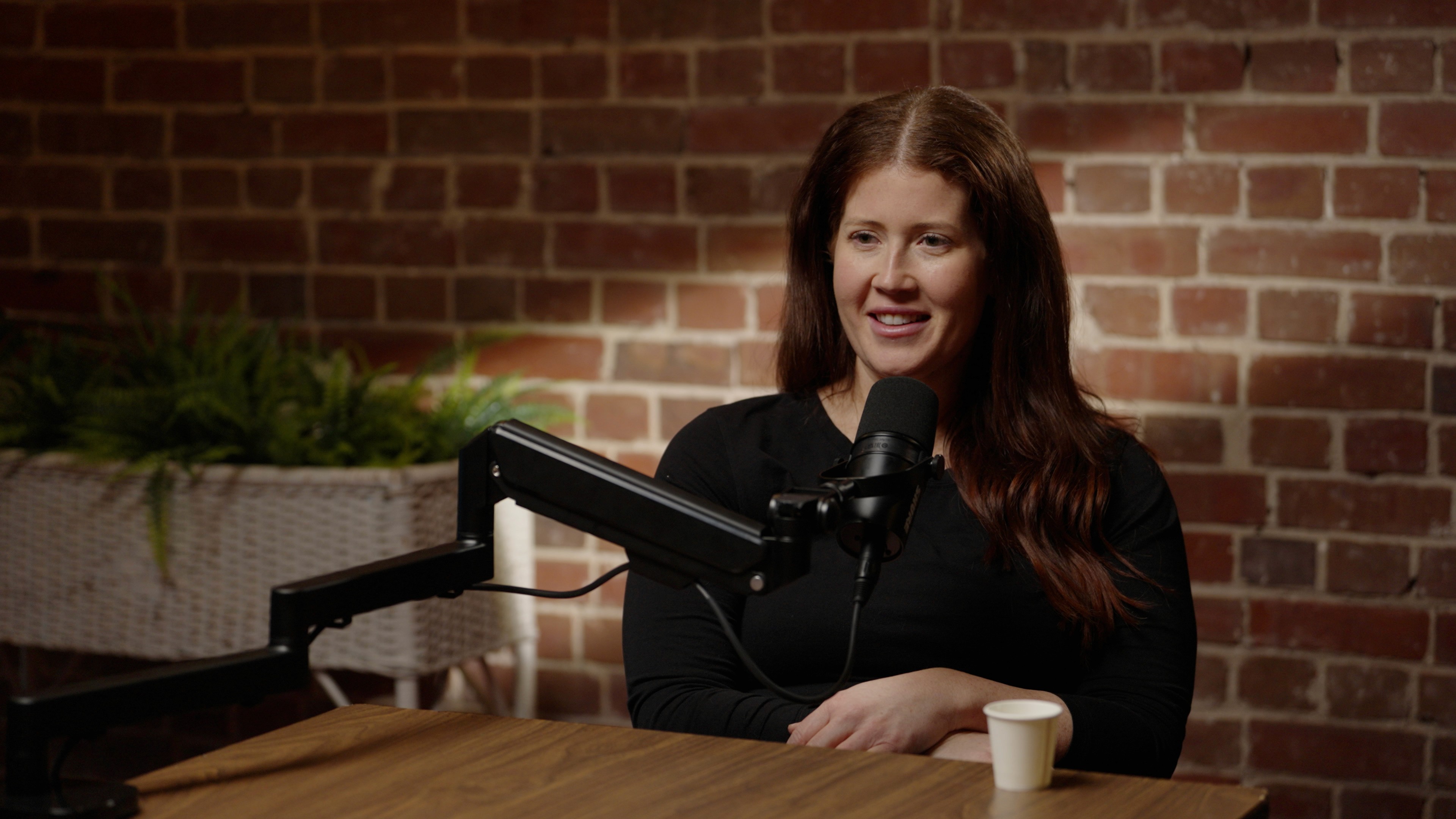
Stephanie built a business from the bottom... two small kids, pregnant with her third, and no safety net. It started with $100, a pay-as-you-go phone, business cards, and a bottle of Windex… and it turned into a life she fought for. In this conversation, we unpack the hidden side of entrepreneurship: control, fear, cash flow, leadership, rebuilding after a major hit in 2023, and what it means to create real stability, not just revenue.
Key Insights: Deep, Universally Applicable Takeaways
The Necessity-Driven Business Genesis
True entrepreneurship often emerges not from passion or opportunity but from absolute necessity with no alternative pathways. Facing single parenthood with three children, no maternity leave, and daycare constraints that eliminated traditional employment, starting a business became the only viable option. This origin story reveals that some of the most resilient businesses are born from desperation rather than inspiration.
The Minimal Viable Launch Model
Starting with $100 borrowed from family—enough for phone minutes, business cards, and Windex—demonstrates that capital scarcity can be strategic advantage rather than liability. The constraint forces immediate revenue generation, prevents over-planning, and creates urgency that well-funded startups lack. This ultra-lean approach eliminates the option of extended runway and demands profitability from day one.
The Competence-Before-Skill Pattern
"If you would have seen my house at that time, you would have been like, you actually can't clean houses." Starting a cleaning business while one's own home was chaotic reveals a universal truth: you don't need to be expert before beginning—you become expert through doing. The willingness to figure it out in real-time, without supervision, matters more than pre-existing skill.
The Learning-Through-Inefficiency Phase
Taking twice as long as competent cleaners and "not making any money for a long time" represents the invisible apprenticeship phase where revenue is sacrificed for skill development. Most businesses fail during this period because founders expect immediate profitability. Understanding that early inefficiency is tuition payment—not business failure—allows persistence through the development curve.
The Teacher-as-Catalyst Transformation
One entrepreneurial professor who said "you're gonna start a business" when barriers seemed insurmountable became the permission-granter that shifted mindset from employee to owner. This reveals that entrepreneurship often requires external validation before internal belief emerges. The right mentor at the right moment can rewrite someone's entire life trajectory.
The Business-Plan-as-Elimination-Tool
Writing business plans for consignment shop and other ventures that "didn't make sense" served purpose even in rejection—each failed plan clarified what wouldn't work, narrowing options toward what would. This negative-space approach (discovering what you won't do) often provides more clarity than positive-space planning (deciding what you will do).
The Daycare-Constraint-as-Business-Parameter
The hard boundary that "daycare only runs Monday to Friday during the day" eliminated entire categories of potential businesses and forced selection of work compatible with parenting constraints. This constraint-based decision-making—starting from non-negotiable limitations rather than open possibilities—often leads to more sustainable ventures than constraint-free planning.
The Tell-Everyone-Strategy
"I just started telling everyone I know that I was going to start cleaning houses" represents the declaration-as-commitment technique. Public announcement creates social pressure to follow through, generates initial customers through warm network, and forces accountability that private planning avoids. This marketing-through-declaration costs nothing but generates immediate leads.
The Money-for-Milk Reality
Days when borrowing money to buy milk became necessary reveals the proximity to absolute poverty that many successful entrepreneurs experienced in their origins. This isn't distant memory but visceral recent history—the knowledge that total financial collapse was one missed payment away creates permanent drive that comfortable beginnings cannot replicate.
The Borrowed-Capital-Without-Repayment-Plan
Asking to "borrow 100 bucks" when having "no way to pay you back" represents ultimate vulnerability and trust. This differs fundamentally from standard lending (collateral, repayment schedule) and instead relies purely on relationship and belief in potential. Such loans aren't financial transactions but investments in human possibility.
The Peace-as-Success-Redefinition
The eventual recognition that peace—not profit, not growth, not achievement—represents true success marks profound philosophical evolution. After years of building, scaling, and proving capability, the ultimate insight becomes that internal calm matters more than external accomplishment. This reframe transforms how success is pursued and measured.
The Home-as-Business-Operations-Center
The concept that "home is the centre of everything we do" and should be run with business-like systems challenges the traditional separation between professional and domestic spheres. Treating household operations with the same strategic thinking applied to business—systems, delegation, cost-benefit analysis—elevates domestic work to enterprise-level thinking.
The Missed-Spot-Mentality Theory
Lying down at night thinking only about undone tasks rather than accomplishments represents universal psychological pattern affecting both household management and life satisfaction. This theory—that humans naturally fixate on gaps rather than gains—explains widespread feelings of inadequacy despite objective success and suggests need for cognitive retraining.
The Environment-as-Internal-State-Reflection
"Our environment is a direct reflection of how we're doing internally" suggests two-way relationship: internal chaos manifests as external disorder, and external disorder reinforces internal chaos. This bidirectional causation means that organizing physical space can improve mental state, while mental distress inevitably appears in environmental neglect.
The Guest-Ready-Home-as-Systems-Test
"If you cannot get your home guests ready within an hour, there's systems that are not working properly" provides objective metric for household efficiency. This time-based standard removes subjective judgment and instead focuses on functional capacity—whether systems support rapid state-change when needed.
The Five-to-Eight-Hours-Per-Person-Per-Week Standard
Maintaining household to manageable level requires 5 hours per family member per week; high-level maintenance requires 8 hours. This quantification—25-40 hours weekly for a family of five—reveals that household management is literally a full-time job. Recognizing this prevents self-judgment when feeling overwhelmed by objectively overwhelming workload.
The Hiding-Behind-Couch Moment
Making three children hide when doorbell rang due to home shame represents the universal experience of feeling exposed by domestic chaos. This vulnerable moment—choosing invisibility over social contact—reveals how deeply home disorder affects mental health and social isolation. This became the origin insight for the entire business.
The Made-Bed-as-Life-Changer
"There's something about walking in to a room where your bed was made that morning that can start to change your life" identifies one micro-action with disproportionate psychological impact. This suggests certain small wins carry more weight than others—not all tiny improvements are equal. Identifying which micro-actions create maximum psychological return becomes strategic.
The Quick-Win-Psychology
Making bed or doing pushups provides same psychological satisfaction of "winning something" despite minimal time investment. This reveals that achievement feeling isn't proportional to task significance but rather to completion itself. Strategic use of quick-win tasks can maintain momentum during larger project difficulties.
The Future-Self-Service Principle
Framing tasks as "doing something for your future self" reframes present effort as gift rather than obligation. This temporal perspective shift—viewing current actions as service to future version of yourself—creates gratitude pathway that reduces task resistance and increases follow-through likelihood.
The Budget-or-Time Binary
"It's either your time or money" applies to household management just as to business operations. The recognition that delegation costs money but doing-it-yourself costs time eliminates the fantasy of cost-free solutions and forces explicit trade-off decisions based on actual resource availability.
The Systems-as-Calm-Creation
Getting "a handle of my home" made everything else "manageable" because returning to calm environment rather than walking into chaos at level-90 stress prevents the shoes-at-door final-straw scenario. This demonstrates that stress isn't additive but multiplicative—reducing one major source (home chaos) disproportionately reduces total life stress.
The Behind-Closed-Doors-Struggle Pattern
Home management struggles happen "silently" and "quietly alone" because people clean to high standard before allowing visitors. This performative dimension—showing only best version—prevents honest conversation about actual daily struggle and creates illusion that everyone else has it figured out.
The Universal-Across-Demographics Reality
Stay-at-home parents and multimillion-dollar-company leaders both experience identical home overwhelm reveals this isn't problem of capability or resources but of systems absence. This universality suggests solutions should focus on methodology rather than assuming different audiences need different approaches.
The Book-as-Ultimate-Vision
"I would love to write a book. It would be called Missed Spot" represents the crystallization of years of theory-building into single definitive work. This long-held dream—years in formation—suggests that major creative projects often require extended gestation before readiness for execution.
The Personal-Brand-Teaching-Mission
Building personal brand "teaching people to run their home like a business" separate from service business represents evolution from doing to teaching, from individual client service to scalable knowledge transfer. This represents natural progression for experts: master skill, build business, then teach methodology.
The Multiple-Business-Portfolio-Strategy
Operating 2-3 companies simultaneously while developing personal brand demonstrates portfolio approach to entrepreneurship. Rather than single focused venture, running multiple businesses with different revenue models, customer bases, and growth trajectories creates resilience through diversification.
The Overwhelmed-Unsupported-Failing Emotional Trinity
"Most people feel overwhelmed, unsupported, like they're failing" when walking in door captures the default emotional state of modern households. This trinity of negative emotions—too much, too alone, not good enough—represents baseline that systems and support must address to achieve peace.
The Home-as-Peace-Requirement
"The place that people need peace the most" identifies home as critical sanctuary requiring intentional design for calm rather than accepting chaos as inevitable. This elevation of home's psychological function above purely practical function (shelter, storage) justifies investment of significant resources in optimization.
The Comparison-to-Business-Operations
Just as businesses delegate financial work based on cost-benefit, homes should make explicit decisions about what to do versus outsource based on time-money trade-offs. This parallel legitimizes household spending that guilt-prone individuals might resist, reframing delegation as strategic rather than indulgent.
The Systems-Library-Concept
Building comprehensive collection of household systems for others to implement represents productization of methodology. Moving from custom consulting (cleaning individual homes) to standardized systems (providing frameworks anyone can use) represents the scalability transition from service to product.
Structural Patterns: How the Content is Organized
The Arc-and-Rollercoaster Frame
Opening with "every time we talk, it's usually like, hey, you wanna talk about the rollercoaster today?" establishes that entrepreneurship is fundamentally about managing extremes and volatility. This framing prepares listener for dramatic ups and downs rather than linear success story.
The Deeper-Origin-Request
When asked about young Stephanie "when business was starting out," her response "Can I go earlier?" signals that true origin precedes business launch. This backward extension into pre-business circumstances reveals that understanding entrepreneurial success requires examining the circumstances that made entrepreneurship necessary.
The Constraint-Stack-Revelation
Progressive disclosure of limiting factors—two small children, pregnant with third, no maternity leave, being in school, realizing single parenthood, daycare restrictions—builds mounting pressure that makes business launch feel inevitable rather than voluntary. This constraint-stacking technique demonstrates how circumstances eliminate alternatives until only one path remains.
The Minimal-Launch-Detail-Focus
Extensive attention to the $100 loan, phone minutes, business cards, and Windex creates specificity that makes abstract "starting with nothing" concrete and replicable. This granular detail transforms inspirational story into tactical playbook—listeners can visualize and potentially replicate the exact launch sequence.
The Incompetence-Admission-as-Credibility
Confessing that own house would have disqualified her from cleaning others' homes builds paradoxical credibility. This vulnerability—admitting starting from position of incompetence—makes subsequent success more impressive and creates permission for others to begin before feeling ready.
The Teacher-Recognition-Moment
The entrepreneurial professor who told her "you're gonna start a business" appears briefly but carries enormous weight. This highlights how single statements from credible sources at critical moments can redirect entire life trajectories, suggesting that mentorship isn't necessarily extended relationship but rather precisely timed intervention.
The Failed-Business-Plan-Sequence
Mentioning writing business plan for consignment shop that "didn't make sense" demonstrates that failed plans aren't wasted effort but necessary elimination process. This sequence validates trying multiple ideas before finding viable one, normalizing false starts as part of discovery process.
The Temporal-Jump-to-Present
After establishing desperate origin, conversation jumps to current state of multiple businesses and personal brand development. This creates before-after contrast that emphasizes transformation magnitude while leaving middle journey for listener imagination or future conversation.
The Theory-Development-Acknowledgment
Mentioning "Missed Spot mentality" as "theory I've been building for years" reveals that current teaching mission rests on extended observation and synthesis period. This legitimizes the personal brand as emerging from deep experience rather than opportunistic trend-following.
The Metric-Provision-Pattern
Providing specific numbers—5-8 hours per family member per week, one hour to guest-ready—grounds abstract concepts in measurable standards. This quantification shift from subjective assessment to objective measurement allows actionable planning.
The Couch-Hiding-Vulnerability
The story of making children hide behind couch when doorbell rang serves as emotional climax—the most vulnerable admission creating deepest connection. This placement of maximum vulnerability not at beginning but after establishment of credibility pattern mirrors therapeutic disclosure timing.
The Made-Bed-as-Gateway-Action
Ending with simple, actionable advice about making bed creates immediate takeaway listener can implement. This structure—complex theory followed by simple practice—makes sophisticated concepts accessible through single manageable action.
The Book-Aspiration-as-Future-Marker
Mentioning long-held dream of writing "Missed Spot" book provides forward-looking element that suggests current businesses aren't final destination but steps toward larger knowledge-sharing mission. This creates sense of ongoing journey rather than arrived destination.
The Multiple-Business-Acknowledgment
"I love the fact that you have like 2-3 companies going any one time" by interviewer validates complexity of entrepreneurial portfolio while prompting explanation of personal brand differentiation. This acknowledgment legitimizes operating multiple ventures simultaneously as strategy rather than distraction.
The Teaching-Versus-Doing-Distinction
Clarifying that personal brand teaches home management while businesses provide services separates doing from teaching, service from education, present from future. This distinction helps listeners understand why one person operates across multiple domains without appearing unfocused.
Hidden Implications: Deeper Meaning and Future Impact
The Single-Parent-Entrepreneurship-Advantage
While single parenthood is typically framed as disadvantage, Stephanie's story suggests it can create entrepreneurial success precisely because it eliminates fallback options. The necessity of solo provision with inflexible childcare constraints forces innovation and commitment that partnered parents with shared income might never develop. This challenges deficit narratives about single parents.
The Poverty-as-Permanent-Motivator
The proximity to needing borrowed money for milk never fully disappears—even after business success, that memory remains vivid and motivating. This suggests that childhood or early-adult poverty creates permanent psychological foundation that affects decision-making and risk tolerance for life, potentially advantaging poverty-origin entrepreneurs over affluent-origin ones in certain contexts.
The Female-Entrepreneurship-Through-Domestic-Skills
Starting with cleaning—traditionally devalued "women's work"—and building it into multiple businesses and teaching platform represents reclamation and elevation of domestic labor. This pattern may indicate broader trend where skills dismissed as non-professional become profitable through recognition that everyone needs these services but nobody wants to do them.
The Service-to-Systems Entrepreneurial Evolution
The progression from doing cleaning to teaching home management systems represents universal entrepreneurial maturity curve: manual labor → business ownership → methodology development → knowledge productization. This suggests most service businesses could eventually transition to educational products if founders invest in articulating their implicit methodology.
The Home-Chaos-as-Mental-Health-Crisis
The recognition that home disorder creates severe psychological distress (hiding from visitors, constant overwhelm, feeling like failure) positions household management as mental health intervention rather than mere housekeeping. This reframe could justify healthcare coverage for professional home organization services.
The Quantified-Home-Labor-Revolution
Stating that household requires 25-40 hours weekly for average family makes invisible labor visible and counterable. This quantification supports arguments for economic recognition of domestic work, validates stay-at-home parent contributions, and explains why dual-income households with children struggle without significant outsourcing.
The System-Absence-as-Root-Cause
Shifting from "you're bad at housekeeping" to "you lack systems" removes moral judgment and replaces it with technical solution. This reframe—from personal inadequacy to structural deficit—represents therapeutic intervention that could reduce shame and depression associated with home management struggles.
The Peace-Economy-Emergence
Defining success as peace rather than achievement signals potential broader cultural shift from acquisition-based to wellbeing-based success metrics. If this represents leading edge of value transformation, we may see growing market for peace-enabling services (home systems, stress reduction, life simplification) over status-signaling ones.
The Made-Bed-as-Keystone-Habit
Identifying bed-making as life-changing micro-action suggests certain small behaviors have cascading effects disproportionate to their effort. This "keystone habit" concept—where one small change triggers broader transformation—could explain why some self-improvement attempts succeed while others fail despite similar effort investment.
The Behind-Closed-Doors-Isolation-Pattern
The universal experience of suffering domestic chaos silently while maintaining public facade of competence creates widespread isolation where everyone assumes they're uniquely failing. Breaking this silence through open discussion could create social movement similar to mental health destigmatization efforts.
The Cross-Demographic-Home-Struggle-Universality
That both stay-at-home parents and corporate executives experience identical home overwhelm suggests modern life structure itself is unsustainable regardless of resources. This implies systemic problem requiring societal-level solutions (different work hours, community support structures, cultural value shifts) rather than individual optimization.
The Business-Home-Boundary-Dissolution
Applying business thinking to home management represents broader trend of life compartments merging. As work-from-home blurs physical boundaries, treating home operations as business operations blurs conceptual boundaries. This suggests future where personal and professional are less separated and more integrated.
The Delegation-Guilt-as-Cultural-Artifact
The need to justify household delegation by comparing to business operations reveals cultural guilt around outsourcing domestic work, particularly for women. This guilt—that proper adults should handle all home tasks themselves—represents cultural artifact preventing rational resource allocation. Overcoming this guilt could significantly improve quality of life.
The Home-as-Stressor-Multiplier
The insight that reducing home chaos disproportionately reduces total life stress (multiplicative not additive) suggests stress management should focus on environmental optimization before individual coping strategies. Current approach focuses on teaching people to handle stress better; alternative would reduce stressor sources systematically.
The Missed-Spot-Mentality-as-Cultural-Epidemic
If focusing on undone tasks rather than accomplishments represents widespread psychological pattern, this explains epidemic levels of dissatisfaction despite objective improvement in living standards. Addressing this cognitive bias through widespread education or cultural shift could improve wellbeing without requiring material improvement.
The Quick-Win-Strategy-as-Momentum-Maintenance
Understanding that small completions provide psychological boost regardless of importance suggests depression and lack of motivation could be addressed through strategic deployment of easy wins. This implies therapeutic interventions should include environmental design for easy victories rather than only cognitive or emotional work.
The Future-Self-Framing-as-Motivation-Hack
Conceptualizing current actions as gifts to future self creates gratitude and obligation simultaneously—thanking future self motivates present action, while feeling obligation to not disappoint future self prevents procrastination. This psychological technique could be taught systematically to improve follow-through across domains.
The Time-Money-Trade-off-Explicit-Recognition
Forcing explicit decision between spending time versus money eliminates middle ground where people pretend resources are unlimited or solutions are free. This clarity could prevent decision paralysis where people neither do tasks themselves nor pay others, instead living with incomplete execution indefinitely.
The Professional-Home-Management-Legitimization
Creating business teaching people to run homes like businesses legitimizes household management as skilled profession rather than natural duty. This could lead to professional certification programs, formal training, career paths in home operations consulting—elevating domestic work to recognized expertise.
The Teaching-Business-as-Scalable-Exit
Building teaching business (courses, books, systems) while operating service business creates eventual exit strategy where founder transitions from operator to educator. This represents model for service business owners to capture value of accumulated expertise without remaining in daily operations indefinitely.
The Multiple-Business-as-Risk-Distribution
Operating 2-3 businesses simultaneously rather than single focused venture represents portfolio theory applied to entrepreneurship. Market downturns, industry disruption, or personal burnout in one area don't threaten overall livelihood. This challenges startup advice emphasizing singular focus.
The Personal-Brand-as-Meta-Business
Developing personal brand separate from operational businesses creates asset that transcends any particular venture. If all businesses eventually fail or sell, personal brand remains and can launch new ventures. This positions personal reputation as most durable business asset.
The Necessity-Entrepreneur-Resilience-Premium
Entrepreneurs starting from necessity (must generate income to survive) versus opportunity (saw market gap) may demonstrate different characteristics—necessity-driven show higher persistence, lower quit rates, faster profitability focus. This suggests entrepreneurship support should differentiate between these types.
The Borrowed-Start-Capital-Relationship-Economy
Starting with $100 borrowed on pure relationship basis (no collateral, no formal repayment) represents informal economy operating alongside formal business lending. This relationship-capital access differentiates those with supportive networks from those without, creating advantage invisible in conventional business analysis.
The Ultra-Lean-Launch-as-Competitive-Advantage
Starting with minimal capital creates permanent cost-consciousness and efficiency that well-funded competitors lack. This suggests successful entrepreneurs might actually benefit from capital constraints that force creative problem-solving and immediate revenue generation rather than extended development periods.
The Learning-While-Earning-Inefficiency-Period
The phase where Stephanie took twice as long and earned nothing while building skill represents hidden apprenticeship occurring within entrepreneurship. Unlike employed apprentices who get paid while learning, entrepreneurs pay (in foregone earnings) to develop skill. Recognizing this prevents premature abandonment during learning curve.
The Constraint-Based-Selection-Wisdom
Choosing business based on daycare schedule compatibility rather than passion, skills, or market opportunity represents constraint-led decision-making. This approach—start from non-negotiables and work backward—may produce more sustainable ventures than starting from desired outcome and hoping constraints accommodate.
The Public-Declaration-as-Marketing-and-Commitment
"Telling everyone I know" serves dual function: generates initial customers and creates social pressure preventing abandonment. This free marketing technique that simultaneously increases commitment represents powerful leverage available to any starting entrepreneur.
The Peace-as-Ultimate-Achievement
After achieving business success, multiple companies, financial security, the realization that peace matters most suggests achievement-oriented culture may be fundamentally misguided. If successful people eventually realize peace trumps achievement, perhaps peace should be primary goal from beginning rather than eventual recognition after achievement-chasing exhaustion.