I Spent Years Behind the Camera. Day One in Front of It Nearly Broke Me.
Dec 20, 2025
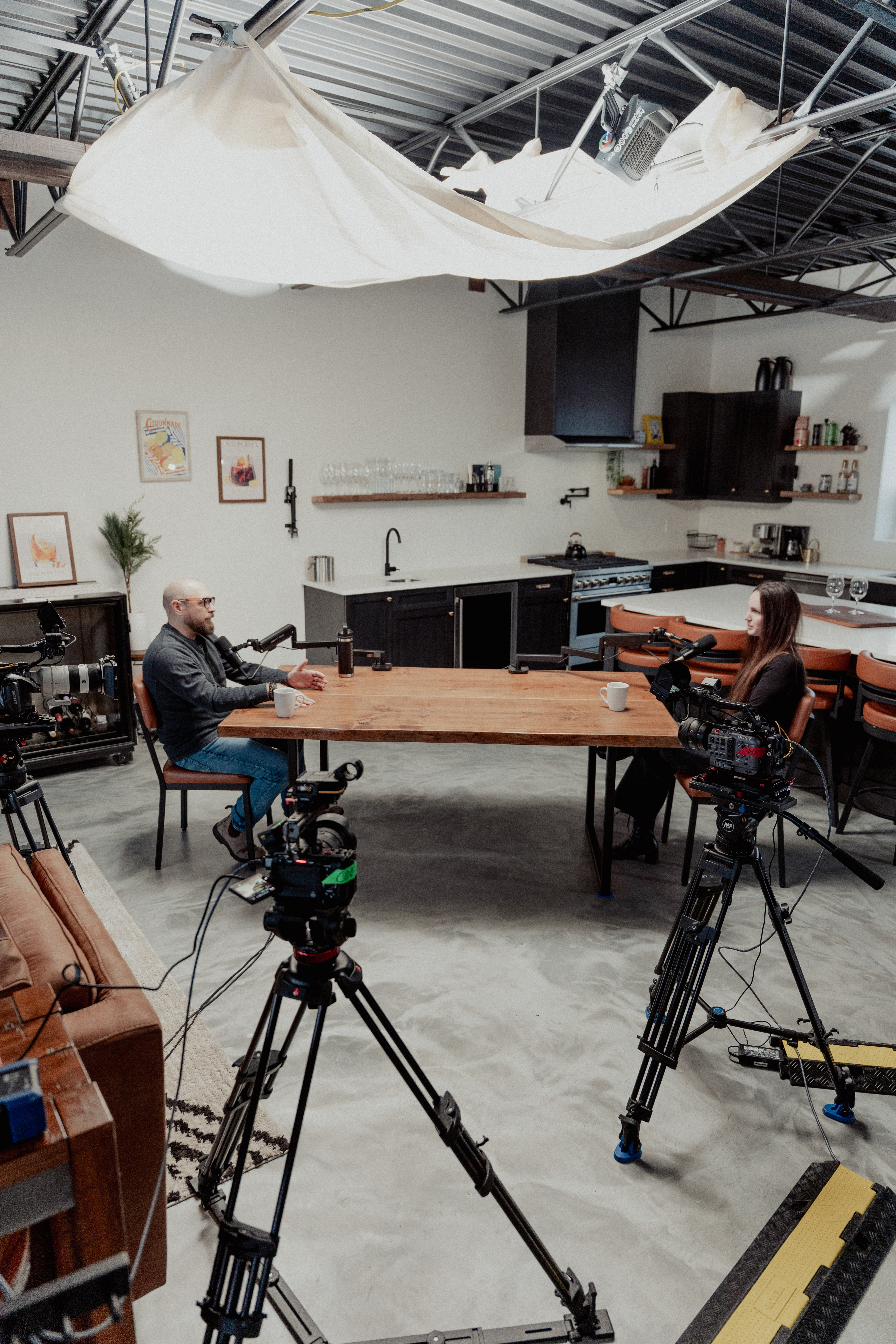
The coffee shop barista asked what I was filming today.
I told her I was starting a podcast. A thousand conversations with people who've done interesting things. Philosophy. Mindset. How people think about living.
She smiled and said it sounded cool.
I didn't tell her I was terrified.
The Client Work Comfort Zone
I've built a career making things for other people. You hand me a brief, I deliver the vision. Clean. Professional. On brand.
The work pays well. I'm good at what I do.
But somewhere along the way, I stopped making things for myself. I stopped exploring. Every project became about meeting specifications, staying within parameters, delivering what the client already knew they wanted.
The creative impulse that got me into this work in the first place? Buried under invoices and revision requests.
You don't notice when this happens. One day you're experimenting with new techniques and pushing boundaries. The next day you're optimizing your process to maximize billable hours. Both feel like progress. Only one is.
The Camera Doesn't Lie (And That's the Problem)
Behind the camera, I control everything. Framing. Lighting. Edit. I decide what the audience sees.
In front of the camera, I control nothing.
The lens captures everything. The moments when I'm thinking too hard about what to say next. The awkward pauses. The times when I'm performing instead of connecting. Everything gets recorded.
There's no hiding when you're the subject.
I kept catching myself using "you" instead of "I" when talking about my own fears. "You worry no one will watch." "You wonder if your perspective matters."
My producer called me out on this. "Why are you talking about yourself in second person?"
Because doing so is easier. Creates distance. Saying "I'm afraid this will fail" feels more vulnerable than saying "you're afraid this will fail."
Language protects us from our own truths.
The View Count Nightmare
Here's the specific fear that kept showing up: What if we spend a thousand conversations for a combined total of 100 views?
Not about the numbers. About what the numbers represent.
Low views mean no one cared. My perspective doesn't matter. I was right to stay behind the camera where things are safe.
Imposter syndrome doesn't announce itself. Quietly suggests you check your analytics one more time.
The anxiety compounds because you're worried about what the work's reception says about you. Every view becomes a referendum on your worth. Every lack of engagement becomes evidence you should have stayed in your lane.
This happens when external validation becomes intertwined with internal self-assessment.
Happiness Is Showing Up and Ignoring Your Expectations
Between the first and second interview, I had a realization.
The anticipation of the day was worse than the day itself. I'd spent weeks building up anxiety about how hard this would be, how exhausting, how exposing.
Then I did the work.
The conversations were good. The guests were generous. The technical problems got solved. The day moved forward.
The experience was fine. The story I told myself about the experience was the problem.
Happiness isn't about outcomes. About presence. About showing up to the moment you're in instead of the moment you're worried about or the moment you wish you were having.
I spent so much energy managing expectations I almost missed the thing I was supposedly doing.
Different Work Demands Different Energy
By interview three, I was wrecked.
Not physically tired. Energetically depleted. There's a difference.
Technical production work requires focus and precision, but doesn't require continuous interpersonal engagement. You recharge between setups. You work in silence.
Interview work requires you to be fully present with another human for extended periods. You're listening at multiple levels. You're tracking conversation threads. You're reading body language. You're managing your own energy while holding space for theirs.
I'd underestimated the energy cost because I'd never done this role before. I thought "talking to people" would be easier than "operating a camera."
Not easier. Different. And different demands different preparation, different recovery, different routines.
I'm learning this in real time. Three interviews in one day might be too many. Or I need better systems for managing the energy expenditure. Either way, I need to approach this work differently than client production.
The Unguarded Moments
The longer you're on camera, the more the real you starts showing up.
The curated version you present to the world requires constant maintenance. You monitor your language. You control your expressions. You stay on message.
But sustained visibility erodes those boundaries. You get tired. You forget to perform. The unguarded moments slip through.
And those moments reveal who you are, not who you've decided to be online.
This creates a new anxiety. Not "will people watch?" but "will people like what they see when they see me?"
The gap between your private self and your public self starts closing. Either terrifying or liberating, depending on how honest you've been willing to be.
What I'm Learning on Day One
Client work makes you technically excellent while making you creatively hollow. The skills compound. The artistic impulse atrophies.
Stepping into visibility requires accepting you'll be seen, which means accepting you'll be judged. There's no way around this. You decide if the work matters more than the fear.
Your expectations about an experience often consume more energy than the experience itself. Show up. Do the thing. Let the outcomes be what they are.
Different creative work demands different energy management. Interview-based content isn't harder than production work. Different. Treat this differently.
The distance between who you are and who you present yourself as will shrink when you're consistently visible. Make peace with this now or suffer later.
What Happens Next
I'm doing 997 more of these conversations.
Each one will teach me something about holding space, asking better questions, managing energy, staying present. Each one will chip away at the performance and reveal more of the person.
The work will shape me into someone capable of doing the work. That's how this goes.
Day one nearly broke me. Day two will be different. Not easier. Different.
And somewhere around conversation 437, when I'm exhausted and doubting everything, I'll remember the anticipation was always worse than the reality.
The only way through is through.
Show up. Ignore your expectations. Do the next conversation.